
Protecting rice crops from pests and diseases is a continuing challenge for farmers in the Ruzizi Plain, eastern Democratic Republic of the Congo. Within the CANALLS Uvira Living Lab, a field study has explored whether a locally produced biopesticide could offer a promising option for crop protection and support the transition towards more agroecological farming practices.
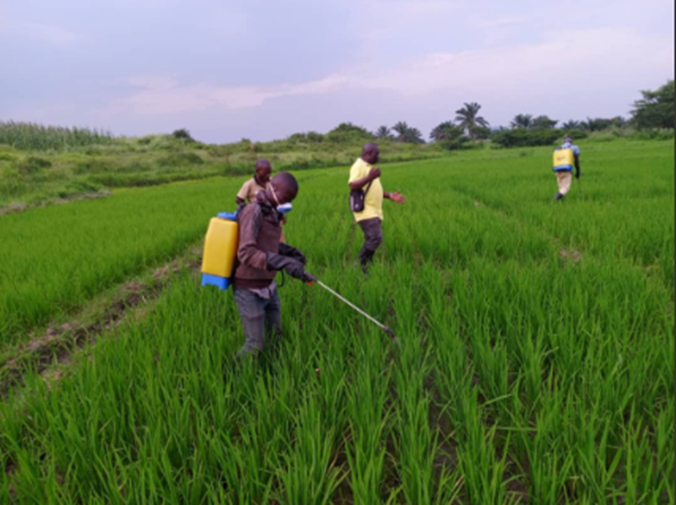
The study focused on CELAB, a locally developed biopesticide, comparing its performance with a conventional synthetic chemical pesticide at Kamanyola and Katogota during the 2025–2026 cropping season.
From local innovation to field testing
Locally adapted crop-protection practices are an important part of agroecological transitions. Testing these practices under field conditions helps build evidence about their potential and identify where further development is needed.
The experiment covered 20 rice fields, with 10 fields at each location, and evaluated the two crop-protection strategies under four fertilisation regimes. Pest and disease incidence and severity were assessed before and after application.
The results were encouraging. In fields treated with CELAB, average pest and disease incidence decreased from 35.88% to 27.50%. A significant reduction was also recorded in fields treated with the conventional chemical pesticide, from 35.25% to 26.03%.
Both treatments also showed significant reductions in the recorded severity measure. After application, the differences between the two treatments were not statistically significant for either incidence or severity. These findings support further investigation of CELAB as a potential component of agroecological rice crop protection.
Different locations, different challenges
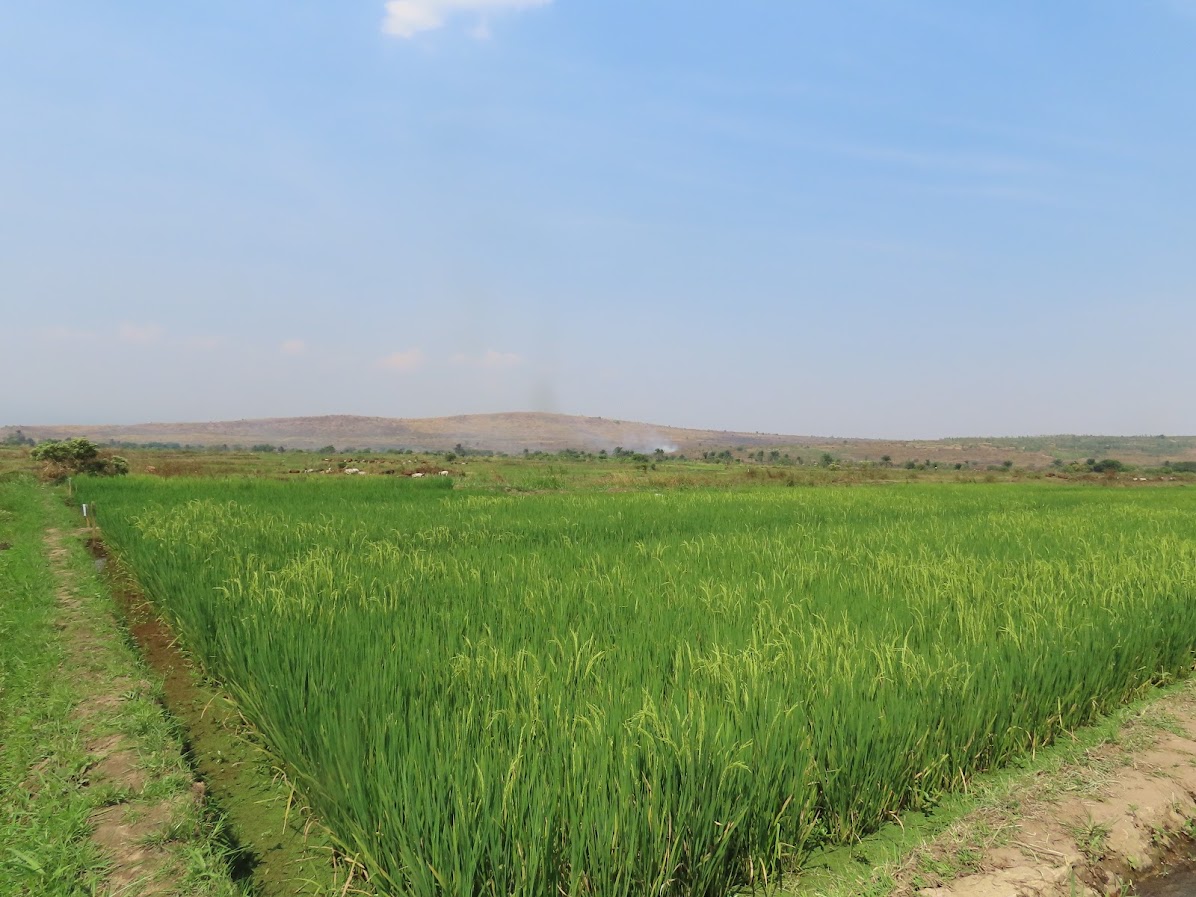
The study also highlighted how pest and disease pressures can vary between nearby farming locations.
Stalk-eyed flies were recorded in all fields at both sites, while brown spot was present at both Kamanyola and Katogota. Rice yellow mottle virus occurred more frequently at Kamanyola, whereas false smut was recorded at Katogota but not at Kamanyola.
These differences reinforce the importance of regular field monitoring and locally adapted crop-protection strategies. Identifying the challenges present in each location helps guide the selection and combination of appropriate management practices.
Encouraging results and further questions
The study provides encouraging evidence that locally produced biopesticides could contribute to crop protection while supporting efforts to reduce dependence on synthetic chemical inputs. However, the findings reflect one cropping season and the specific conditions of the experiment. The absence of statistically significant differences between the treatments does not establish that they are equally effective across all pests, diseases or farming conditions.
Further studies across seasons and locations will help clarify CELAB’s potential. These should include assessments of individual pests and diseases, rice yields, costs, the duration of protection and compatibility with other agroecological practices.
For the Uvira Living Lab, these results provide a foundation for continued experimentation and learning, contributing to CANALLS’ efforts to develop locally adapted approaches to sustainable agriculture in Central and Eastern Africa.