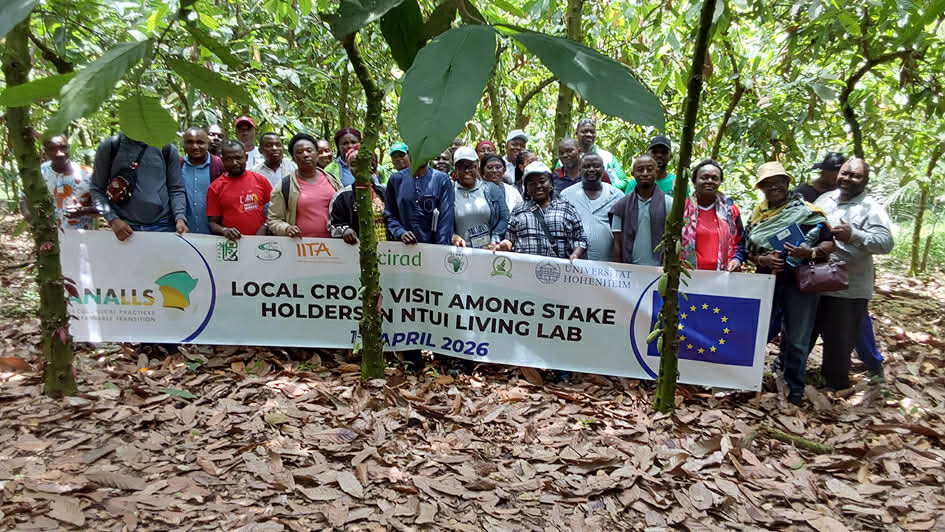
On 1 April 2026, the Ntui Agroecological Living Lab in Cameroon opened its doors to a diverse group of stakeholders for a local cross visit under the CANALLS project. Bringing more than 30 participants—from farmers and researchers to policymakers, extension agents, and private sector representatives—the event created a dynamic space for shared learning and collaboration.
Organised by CAMFAAS alongside partners including IRAD, CIRAD, SCOOPMAN, AFAAS, and IITA, the visit was designed to strengthen connections between actors and encourage the exchange of agroecological knowledge and practices.
The day began with an introduction to the Ntui Living Lab, followed by a field visit to experimental sites located in the forested area of Bivouna. There, participants explored ongoing trials on biopesticides and foliar fertilisers, gaining first-hand insight into how these solutions perform under real farming conditions.
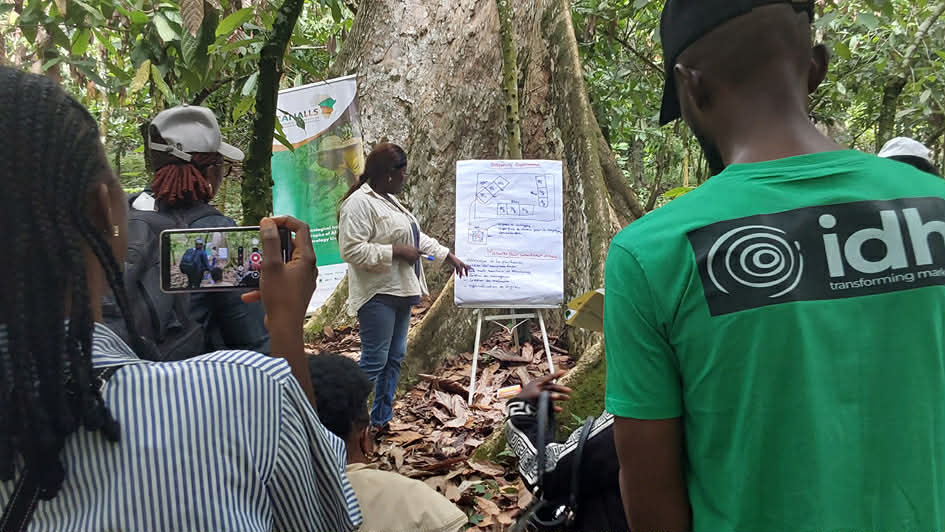
At the biopesticide trial plots, participants observed three different approaches: biological treatments, conventional chemical pesticides, and farmer-managed practices. Discussions with researchers revealed that biopesticides can match—and in some cases even outperform—chemical alternatives, particularly in terms of yield. These results also highlighted how local environmental conditions, such as shade and microclimate, can influence effectiveness.
The visit continued with the foliar fertiliser trials, where participants learned about simple but effective methods for monitoring production, including regular pod counting and yield estimation. These practical insights sparked discussions on how such approaches can support better decision-making at farm level.
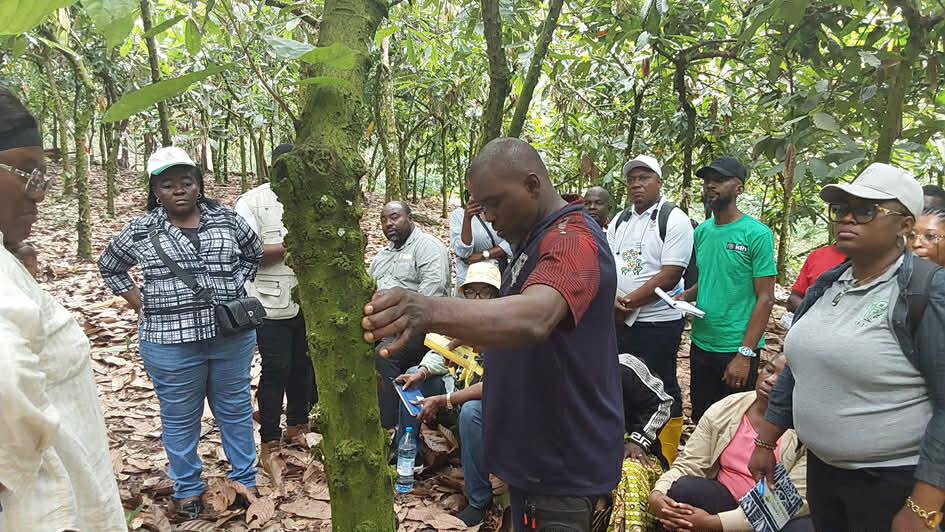
Beyond the technical findings, the visit stood out for the rich exchanges between participants. Farmers shared their experiences and perspectives, expressing satisfaction with the tested practices while also offering suggestions for improvement. Their engagement underscored the value of participatory approaches in shaping solutions that are both effective and locally relevant.
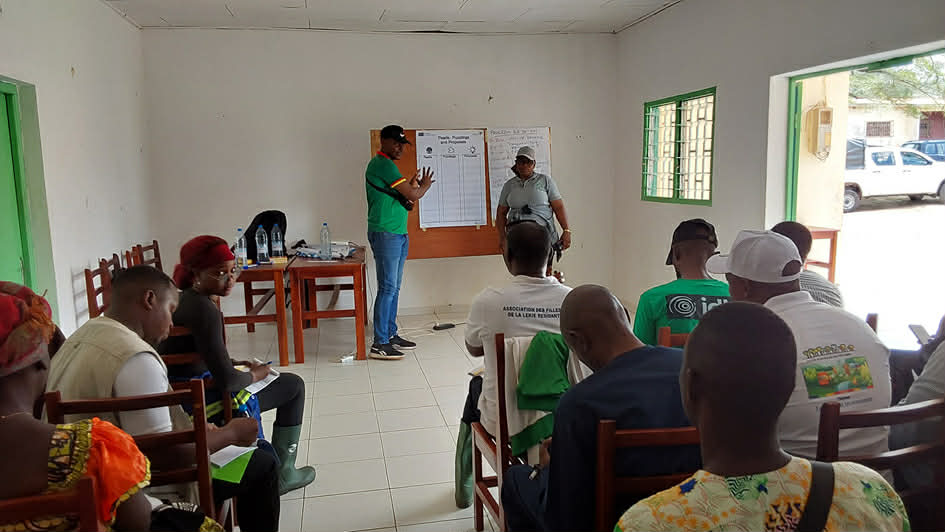
The day concluded at the IRAD station with a discussion on innovation challenges and opportunities within the Living Lab. These conversations reinforced a shared commitment to continue working together to advance agroecological transitions.
Through initiatives like this local cross visit, the Ntui Living Lab demonstrates how collaboration, experimentation, and knowledge exchange can come together to support more sustainable and resilient farming systems.